The hidden threat to business growth is electricity
For decades, business growth came from securing funding, attracting skilled workers, and finding customers. A new constraint is now quietly joining that list and, unlike the others, we cannot negotiate it, disrupt it, or hire our way around it.

Electricity is fast becoming one of the most overlooked threats to business growth, and most executives have yet to recognise it.
For most of modern business history, electricity appeared as just another line item on the P&L. That era is now over. Across the world, the rapid growth of artificial intelligence, data centres, electric vehicles, and advanced manufacturing is placing significant pressure on power systems.
At the same time, ageing grids and supply chain constraints are making it harder to expand electricity generation. As a result, competition for it is increasing.
Read: Why leaders should pay attention to AI’s growing electricity demand
Read: How Artificial Intelligence is redefining careers in clean energy
While energy has historically been categorised as an operational expense, it is increasingly viewed as a strategic resource that can determine how fast businesses grow. For business leaders, understanding this shift is becoming essential.
Energy demand is growing faster than supply infrastructure
Around the world, projects are being delayed not just because of financing or labour shortages, but because sufficient electricity is unavailable. From Ireland to Canada, the UK to Germany, the same story is playing out in different accents.
- Dublin’s explosive growth in data centres came to a halt in 2021 when regulators imposed a pause on new developments, citing strain on the electricity grid. In 2025, the regulator lifted the restriction, but new data centres must now install on-site generation, supply power back to the grid when needed, and source at least 80% of their electricity consumption from renewable energy.
- The U.S. is facing a severe transformer shortage that is delaying grid modernisation, renewable projects, and data centre development. Power transformer demand has surged 119% since 2019, and lead times now exceed two years.
- In Canada, multiple real estate developers in Kelowna were advised to pause construction until 2027 or 2028 due to limited electrical capacity. This shows how the power shortages affect not just data centres, but ordinary property developments too.
- At the start of 2025, the UK held the largest renewable energy grid connection backlog in Europe, with over 700 GW of projects waiting in queues the grid can only partially absorb. Projects expecting 2026 connections are given new dates of 2035.
- Energy regulators in Germany have warned that the planned expansion of the electricity grid may not be sufficient to meet future demand. As a result, the EU may require Germany to divide its electricity market into separate pricing regions. This could increase the costs for manufacturers, who already pay some of the highest industrial electricity prices in the world.
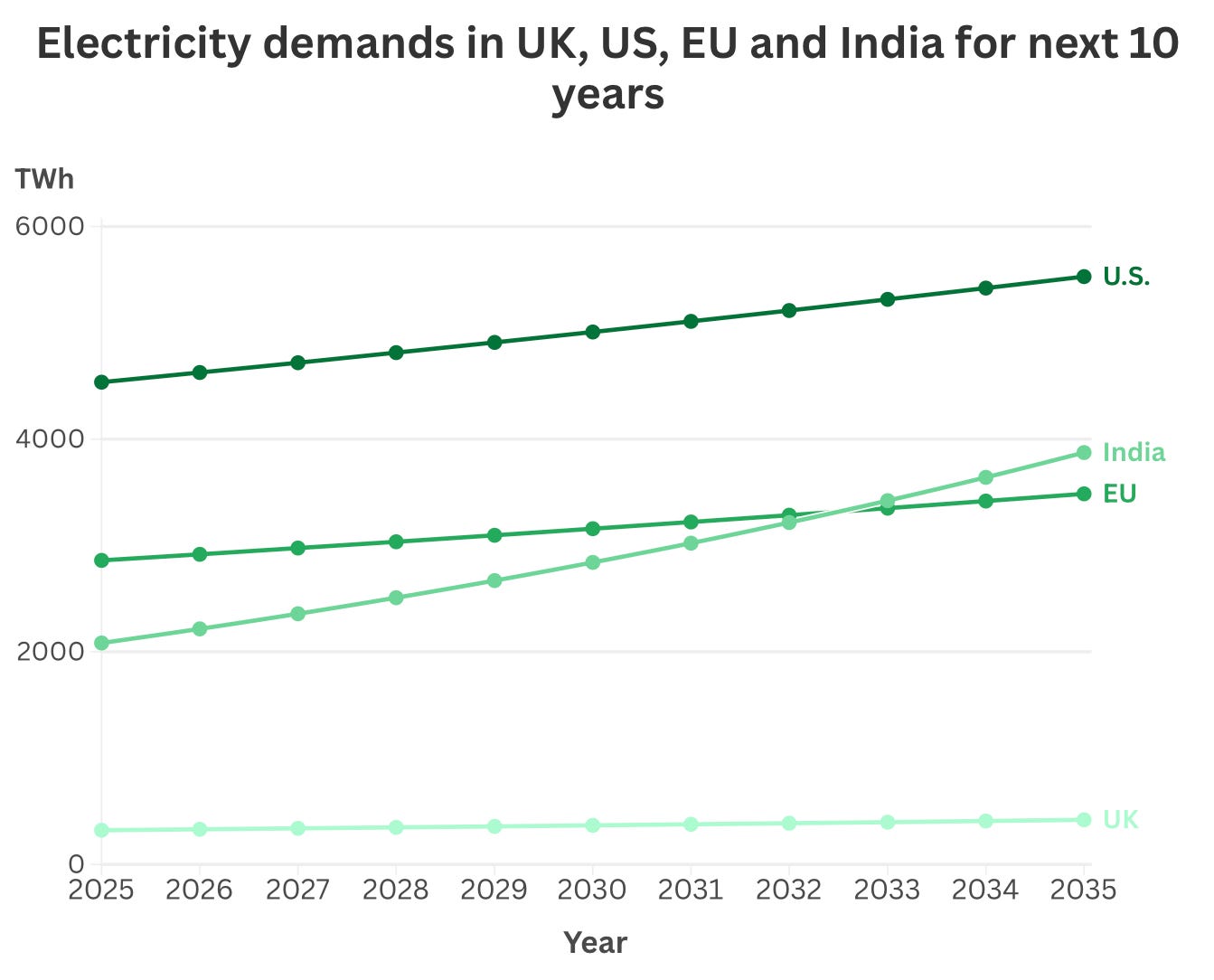
In each case, electricity availability has become a limiting factor on growth. Figure 1 shows the IEA estimation of electricity demand in different regions through 2035. The demand is going up every year. The U.S. increase is driven by data centres, while the EU grows modestly.
So, now businesses need to add an additional variable to every investment decision: Does this location have sufficient, reliable and affordable electricity?
Electricity as a strategic business resource
Electricity has quietly moved from a commodity to a strategic resource. And unlike most resources, it cannot be imported overnight, stockpiled, or substituted.
The problem is that electricity supply does not scale at the same speed as the ambitions it is being asked to support. As a result, there is a widening gap between what the economy demands and what the grid can deliver.
For decades, that gap was just theoretical, something discussed in policy papers and long-range forecasts. It is now showing up in project delays, investment deferrals, and strategic decisions being made at boardroom level.
When electricity infrastructure projects are delayed, supply can struggle to keep pace with growing demand. This increases electricity prices in affected regions.
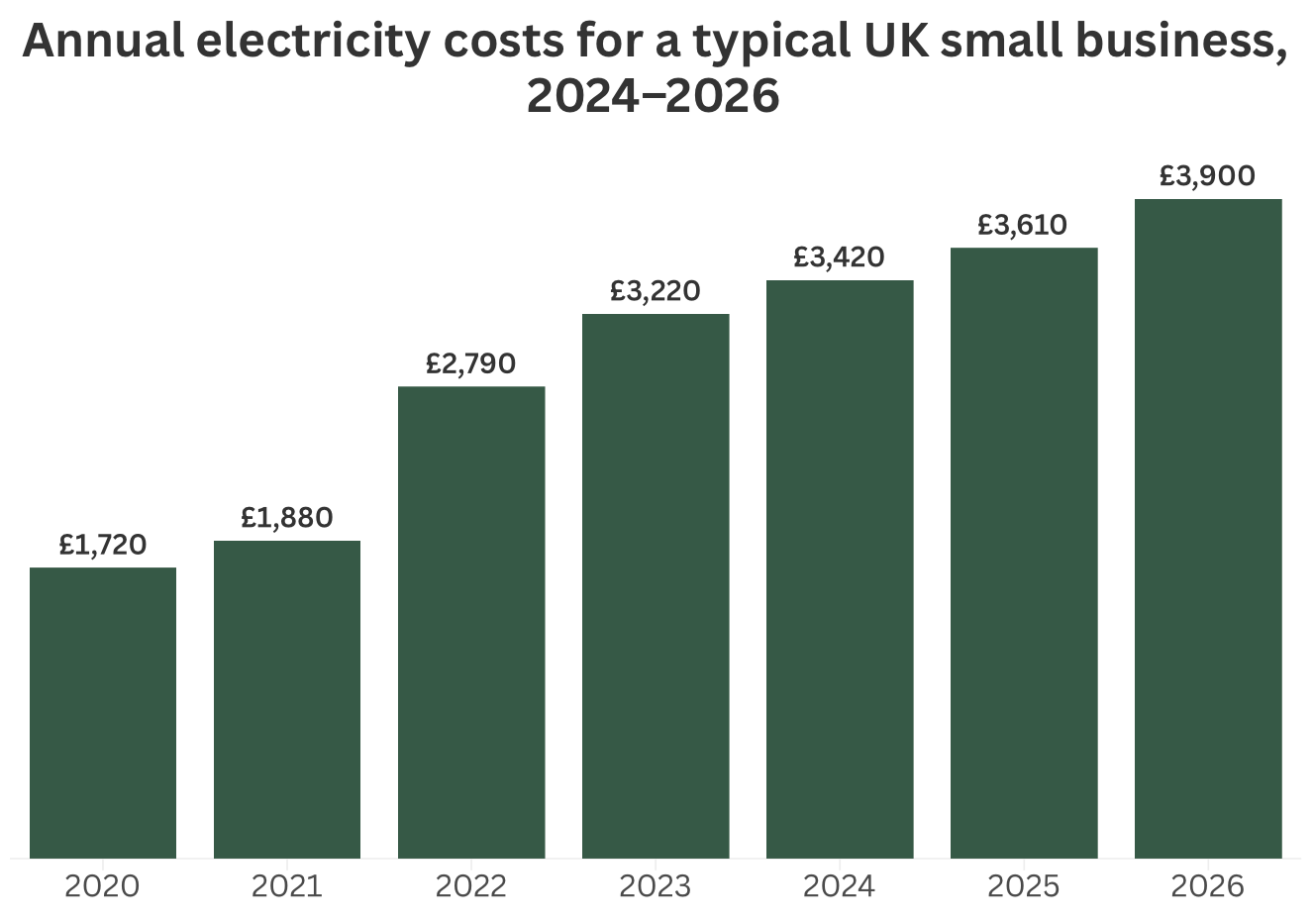
Figure 2 illustrates the estimated costs for a typical UK SMEs. Based on a notional SME consuming 10,000 kWh per year, annual electricity costs are projected to rise from approximately £3,420 in 2024 to around £3,900 in 2026 (a 14% increase). Rising non-commodity charges, such as infrastructure maintenance, government taxes, and environmental levies are the primary driver, according to BFY Group's June 2026 analysis.
Read: Why electricity bills will keep rising even as energy gets cheaper
Why energy matters beyond technology
It may be easy to assume that electricity scarcity is a technology sector problem but it’s actually more than that. The NFIB’s Small Business Energy Survey, published in February 2026, found that electricity is most likely to be rated a “moderate to serious problem” by small business owners.
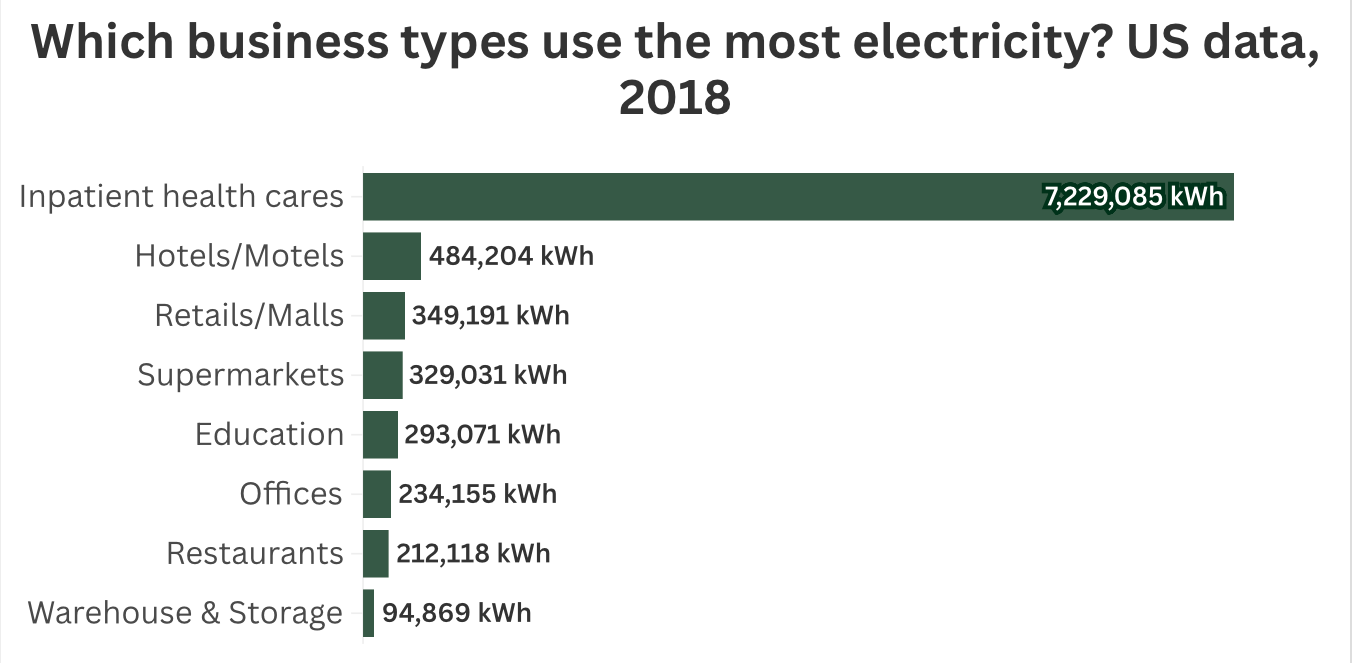
The U.S. Energy Information Administration’s Commercial Buildings Energy Consumption (CBECS) surveyed 6,436 commercial buildings across all 50 US states in 2018. Responses represented an estimated USD 5.9 million commercial buildings nationwide.
The result showed that a single average hospital building consumes approximately 7.2 million kWh annually, followed by hotels/motels at 0.48 million kWh. For companies in tight-margin industries, the math is simple: if the electricity bill rises 20% and the net margins are 5%, the company is in trouble.
While increasing competition for electricity creates risks, it also presents opportunities. Improving efficiency remains one of the most effective ways to reduce exposure to electricity constraints. Modern equipment, smart building technologies, process optimisation, and energy management systems can lower consumption while improving operational performance.
Many organisations are pursuing Power Purchase Agreements (PPAs) to secure long-term electricity supplies and improve cost predictability. These arrangements can provide both sustainability benefits and strategic resilience.
How businesses can respond
Business leaders should stop treating electricity solely as a utility expense and start incorporating it into strategic planning.
A PPA is a long-term contract under which a company commits to purchasing electricity directly from a renewable energy developer at an agreed price. The only drawback of this scheme is PPAs typically require businesses to commit to contracts lasting 10–20 years.
This is why 49% of all global PPA activity in 2025 was controlled by just Meta, Amazon, Google and Microsoft. Most small businesses lack the scale and energy consumption to meet these thresholds.
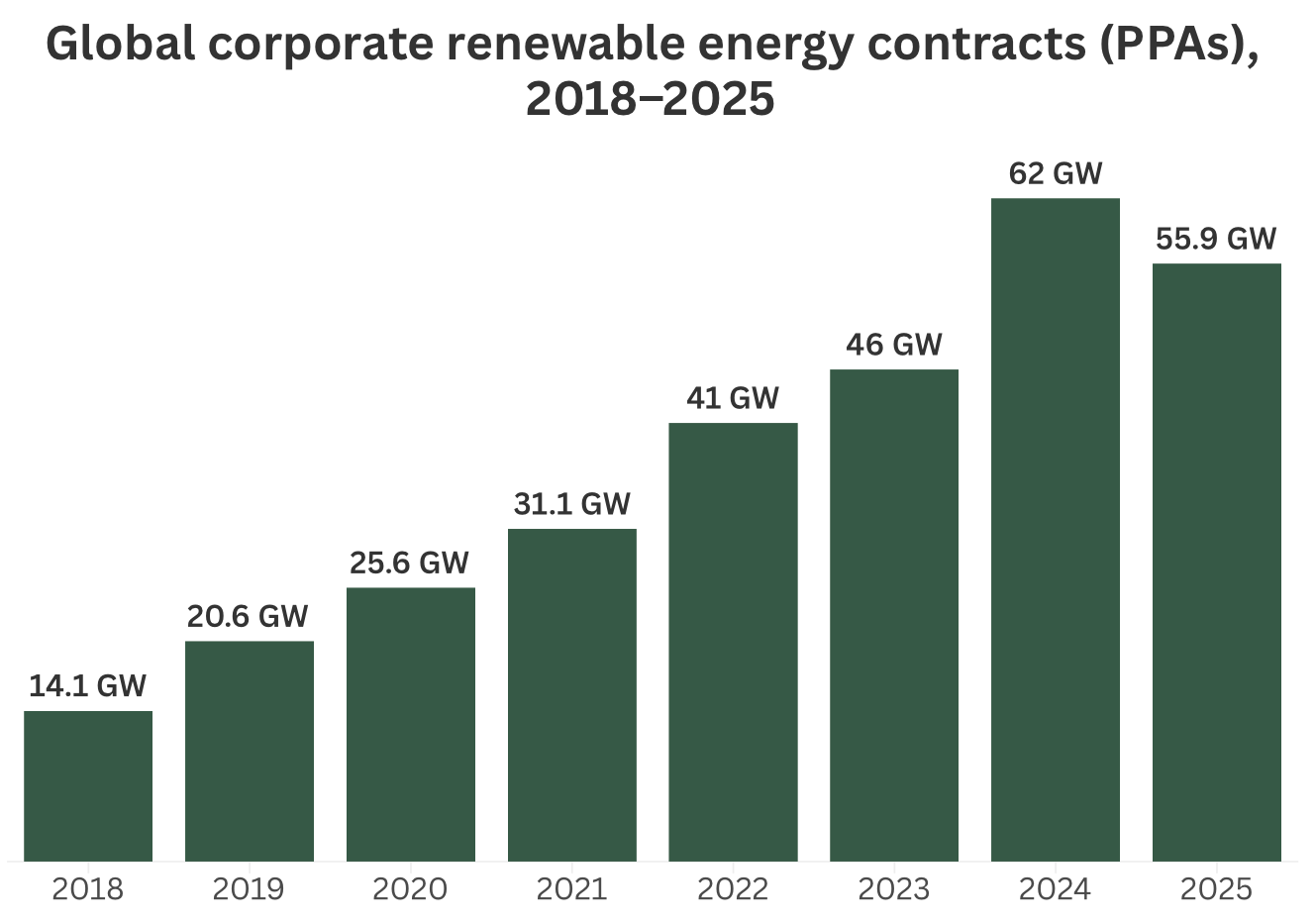
BloombergNEF is tracking the number of PPAs signed every year globally. Figure 4 shows that the total volume of PPAs are going up every year except 2025. The drop in last year reflects rising power prices, U.S. policy uncertainty, and shrinking buyer diversity.
Several other actions can help large and small businesses position themselves effectively.
- Understand how electricity availability and pricing could affect the operations and growth plans, particularly during site selection and expansion decisions.
- Evaluate grid capacity and long-term electricity supply before committing to new locations or investments.
- Build relationships with utilities, policymakers, and infrastructure providers before problems arise, and monitor grid and energy market developments.
The next decade will likely be defined by extraordinary growth in electricity demand. For businesses, it will become another constraint on growth, alongside capital, talent, and customers. Capital can be raised and talent can be hired, but electricity cannot simply be switched on.
We cover renewable energy, climate risk, and sustainability economics. Subscribe to get new articles in your inbox.