Leaders are spending more on AI. Can it deliver on sustainability goals?
In 2024, Gartner's survey found out that, on average only 48% of a company's digital initiatives met their business targets. The survey polled 3,186 CIOs and technology executives of all major industries across 88 countries.


Although the survey was published only about two years ago, a lot has changed in digital world since then. AI has mostly taken over a huge share of digital transformation's popularity. Mckinsey's 2026 “State of AI”survey found 89% of organisations reported using AI in at least one business function (Figure 1).
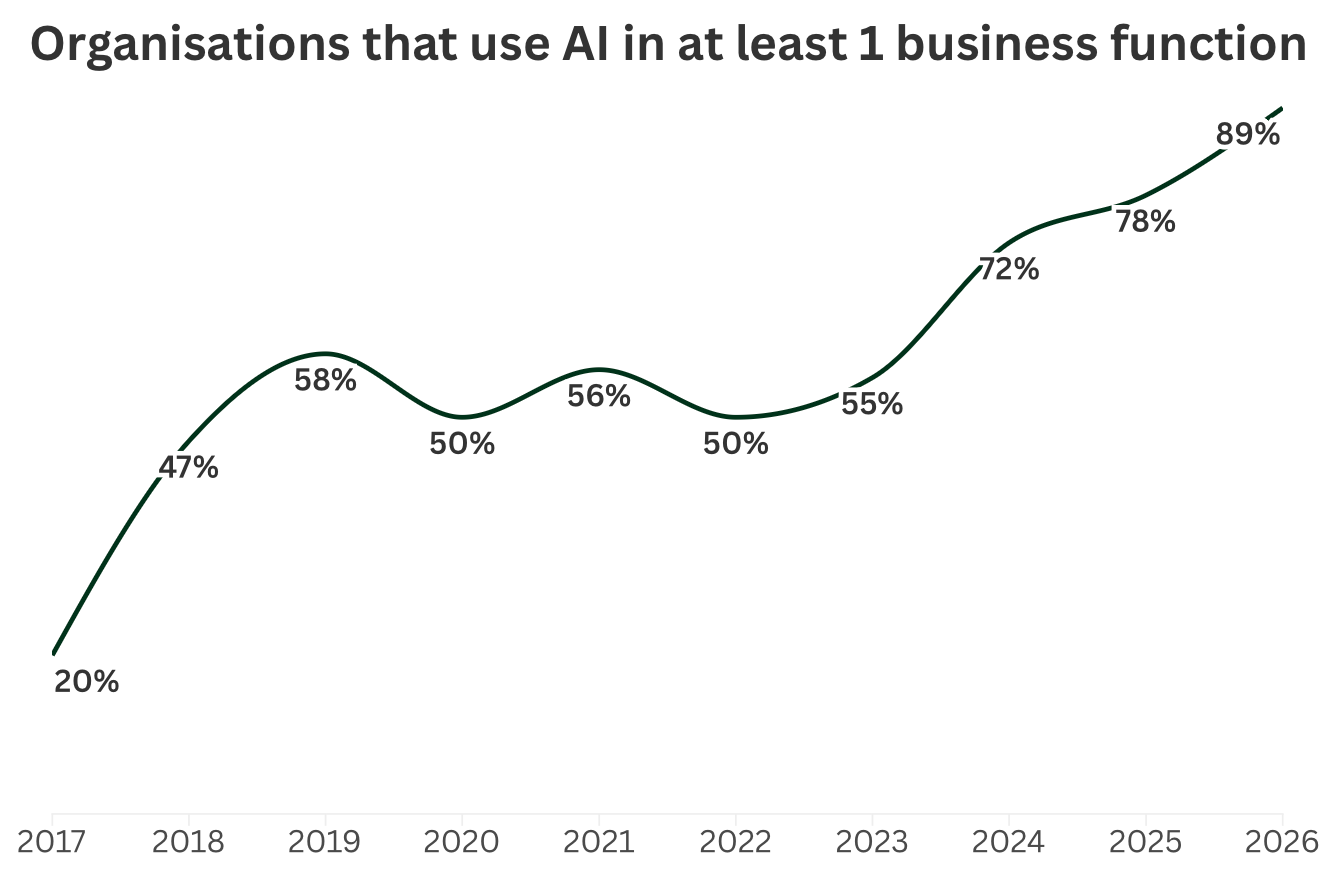
The figure stayed constant during COVID-19 and at the start of Russia-Ukraine conflict but has since increased sharply. However, the sample size of the participants varies from year to year. In 2026, there were 1,719 participants globally.
Leaders hope to meet sustainability goals using AI
The digitize-to-survive mindset of businesses was already there for more than a decade. Now, leaders are busy responding to dynamic market changes, ultimately fostering AI innovation and enhancing resilience.
But businesses nowadays do not have much choice anyway. Because all stakeholders, from investors to customers to employees prefer to see their companies going digitalisation, whether that is to meet sustainability or economic targets or simply just to avoid falling behind in the AI race.
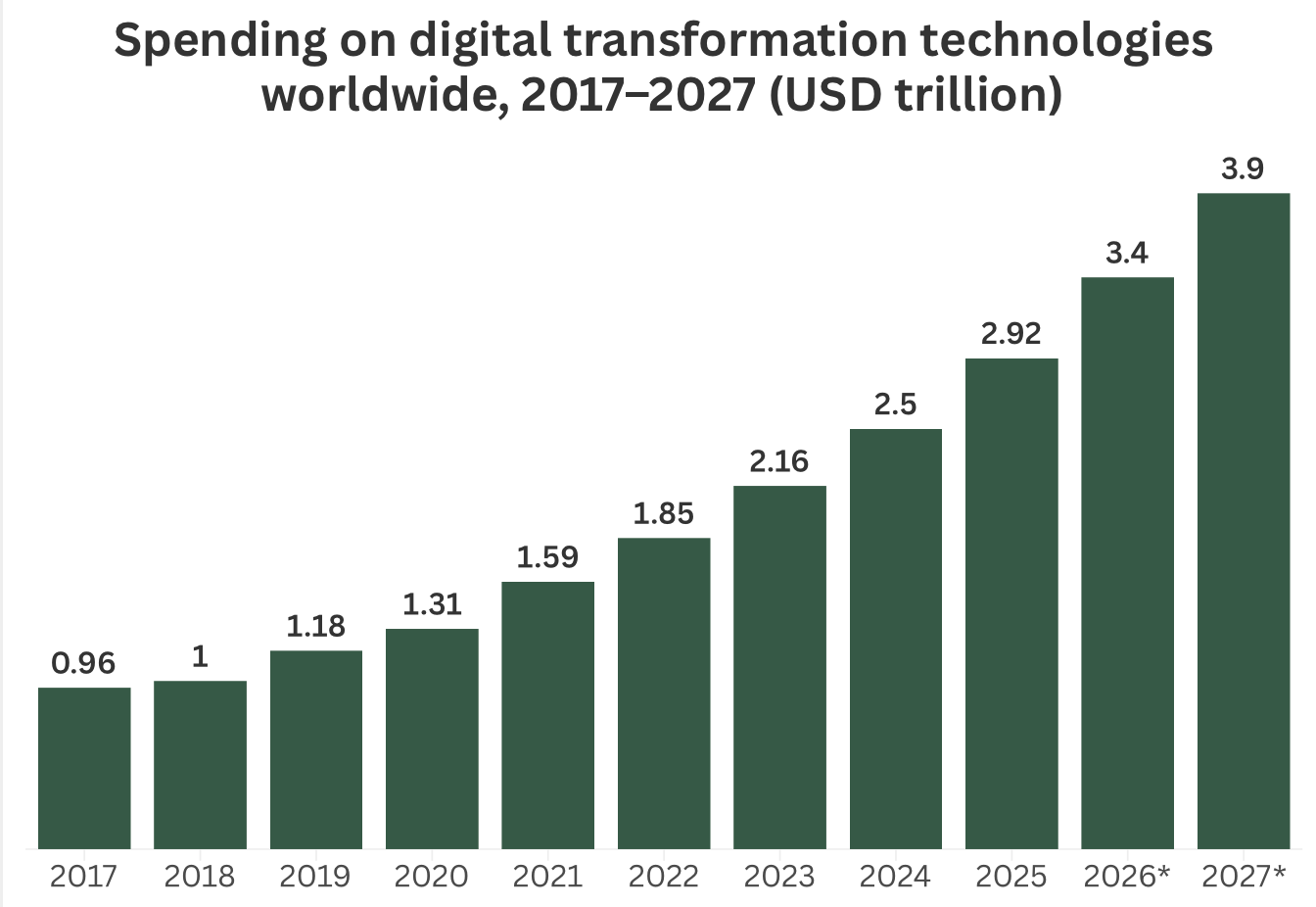
Figure 2 shows spending on digital transformation technologies worldwide from 2017 to 2027. The figures in the last few years have been heavily influenced by spending on AI.
As the technology evolves, leaders are experimenting with AI-driven solutions to speed up towards their sustainability goals.
Figure 3 shows the result of Deloitte's 2025 C-suite Sustainability Report, based on a survey of 2,106 executives across 27 countries. The figure shows that 83% of them had increased sustainability investment over the past 12 months. And 81% of them said they are already using AI for sustainability, whereas 16% are planning to start this year.
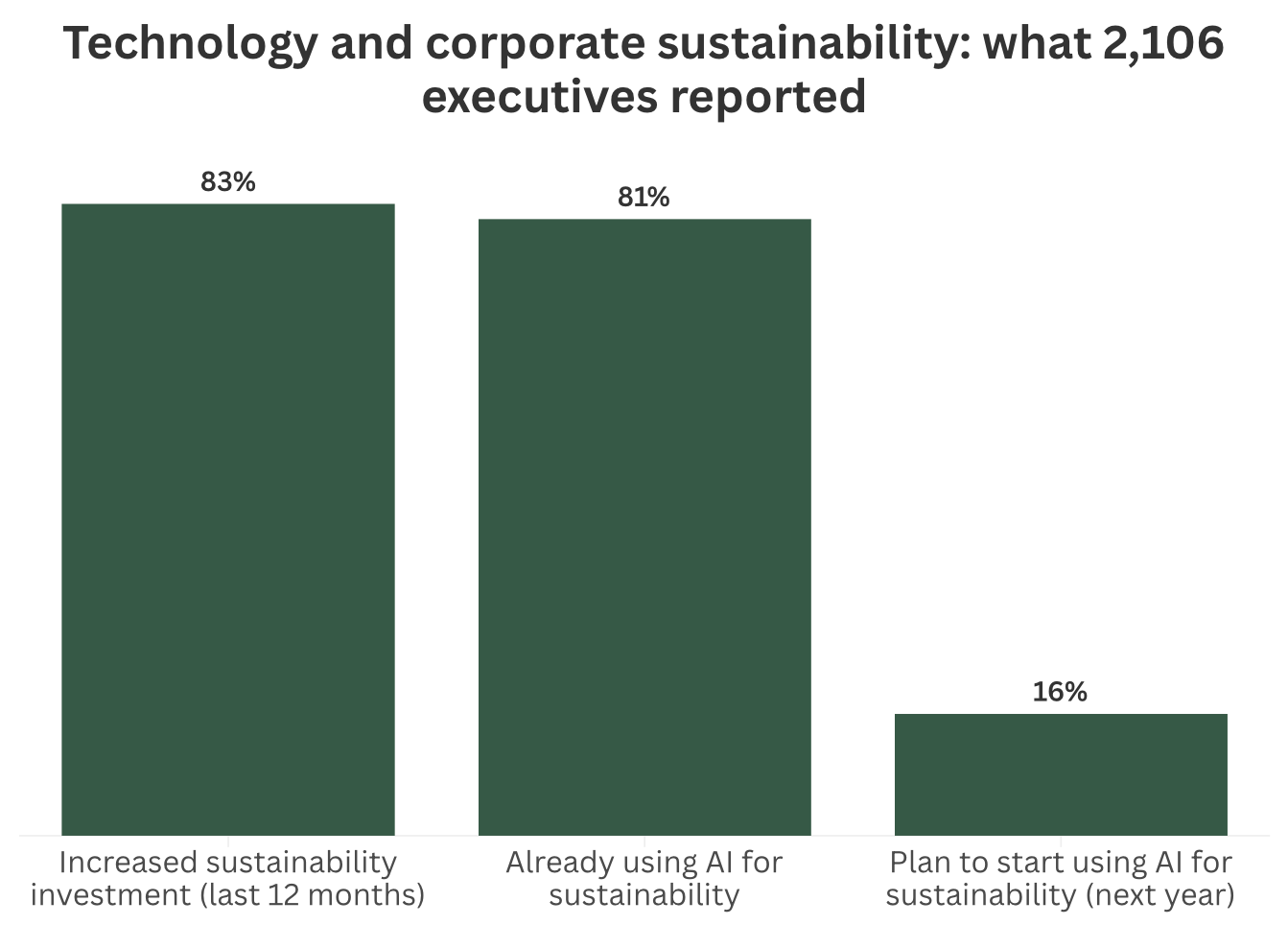
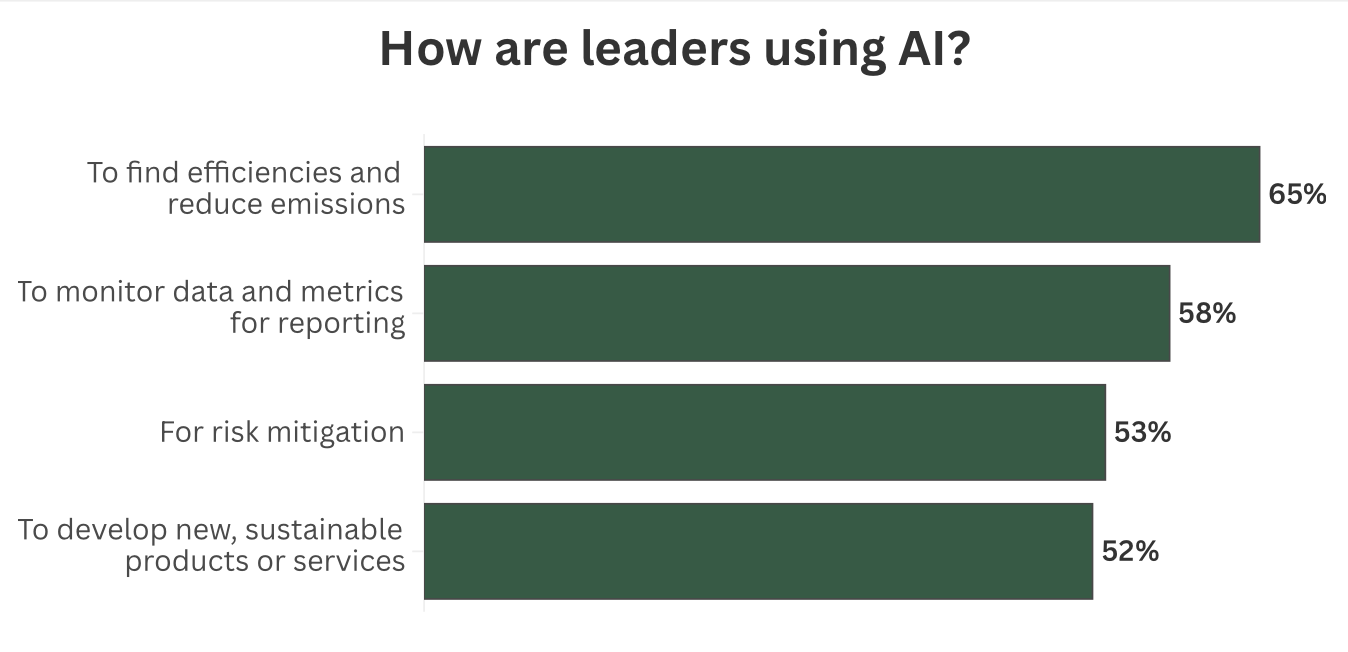
Figure 4 demonstrates results from the same survey as figure 3, showing how leaders are using AI currently. The majority of AI use is aimed at finding efficiencies and reduce emissions. This shows that leaders now have taken the sustainability challenges seriously and are already ahead in implementing AI for it.
Companies plan to increase investment in AI
Across various domains, the current trends in AI are oriented toward enhancing overall efficiency. This includes improved management of technology, effective handling of processes, and automation.
However, the technology should exhibit the flexibility to align with the current business processes, the objectives of the transformation, and the scalability necessary to accommodate future growth.
One notable example is, GE Healthcare, which has strategically embraced digital transformation and AI into their business. Through this implementation, the company has successfully enhanced maintenance procedures, minimized downtime, and elevated the quality of customer service it provides.
Previously, I wrote about BCG's 2022 survey, which found that 60% of executives planned to increase digital transformation investment by 2023. Three years on, as AI has progressed enormously, its obvious that most of that focus has shifted towards it.
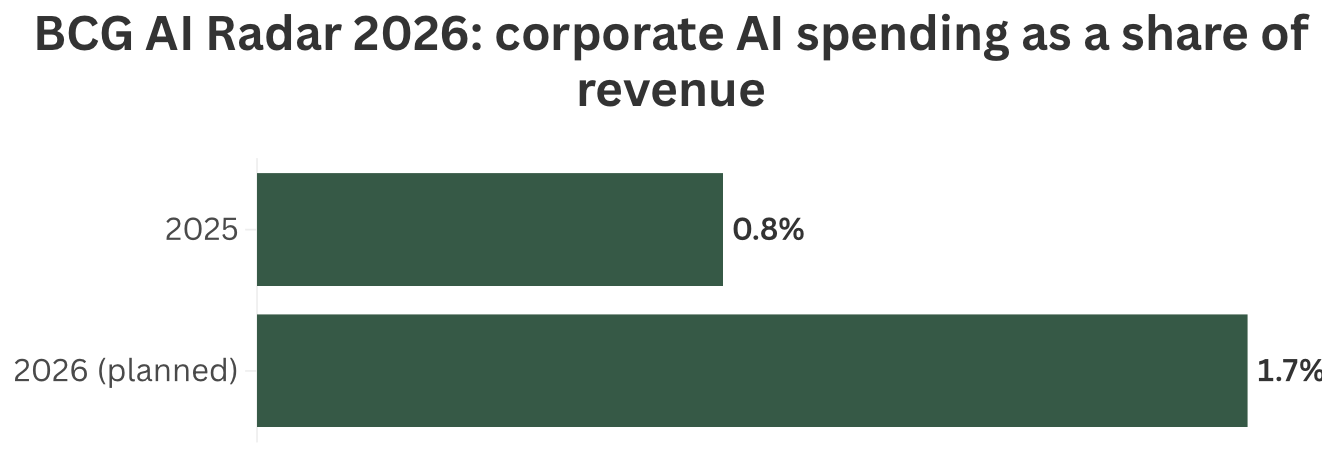
BCG's new global survey shows that companies plan to roughly double AI spending as a share of revenue, from 0.8% in 2025 to a planned 1.7% in 2026 (Figure 5). This new survey, published in January 2026, is based on responses from 2,360 executives across 16 markets and nine industries.
Related: The rising interest in tracking Scope 4 emissions
AI's economical and environmental influence
AI has become so powerful that it could actually bring the next revolution. It's progress has been so fast that it is almost frightening, because no one is certain how AI will evolve in next days.
UN Secretary-General António Guterres, at London Climate Action Week in June 2026 said, “As demand for energy continues to rise, we must confront one of its fastest growing sources: AI data centers. Artificial intelligence can accelerate climate solutions. It can help cure disease, transform education, and enable humanity to tackle challenges once thought beyond our reach. We must harness that potential. But AI is also hungry for land, water and power”.
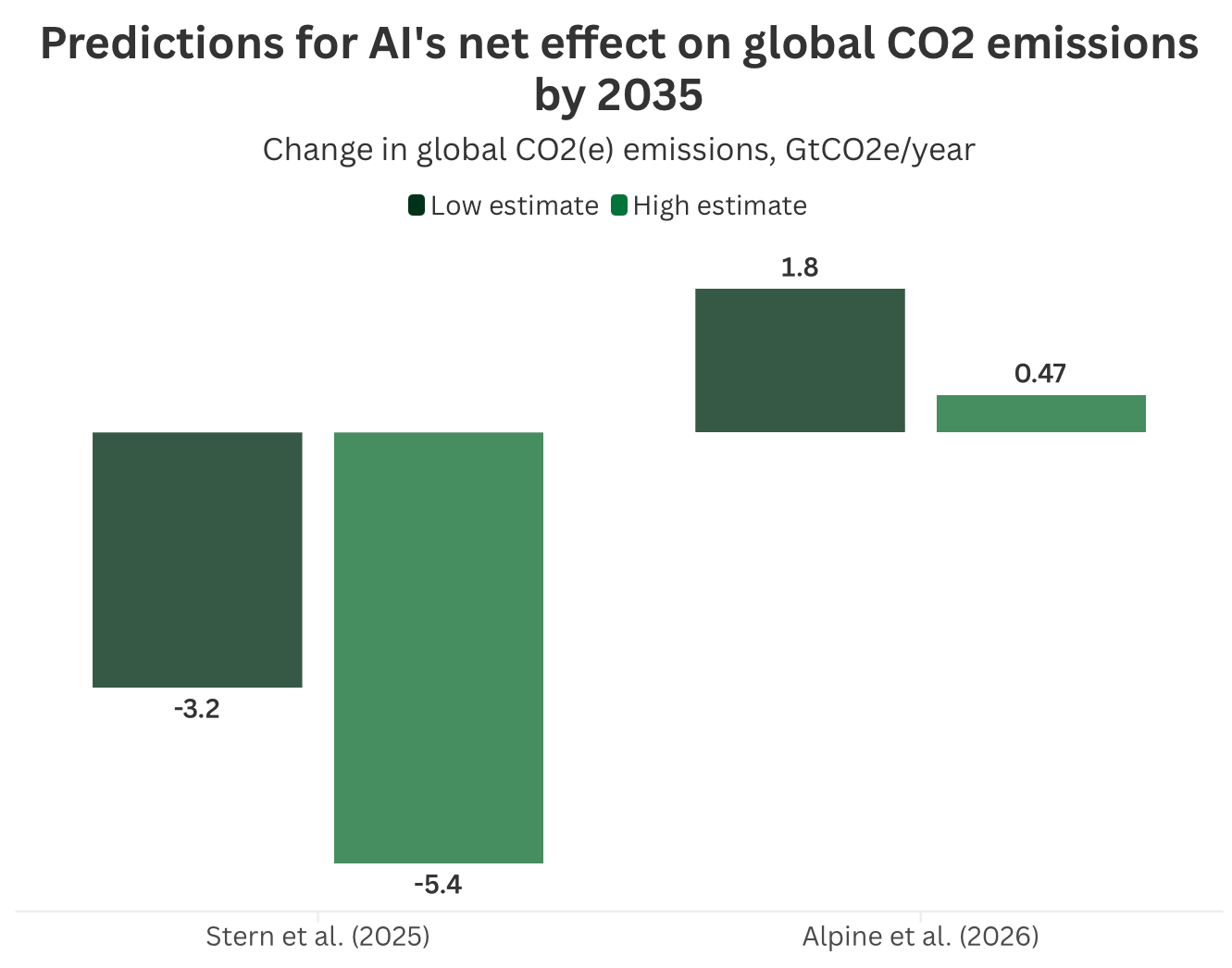
One clear example of this uncertainty is AI's influence on environment. Figure 6 shows the results of two peer-reviewed studies on AI’s net climate effect by 2035. Stern et al. (2025) estimated that AI could cut emissions by 3.2-5.4 GtCO2e annually, measured against 2023 sector baseline.
A year later, Alpine et al. (2026) found the opposite. The team expects AI could raise net emissions by 0.47-1.8 GtCO2e per year, mainly because it boosts fossil fuel extraction (Figure 6).
AI has evolved so fast that even scientists can’t agree whether AI increases or decreases the emissions.
Related: Green skills gap predicted to affect 7 million workers by 2030
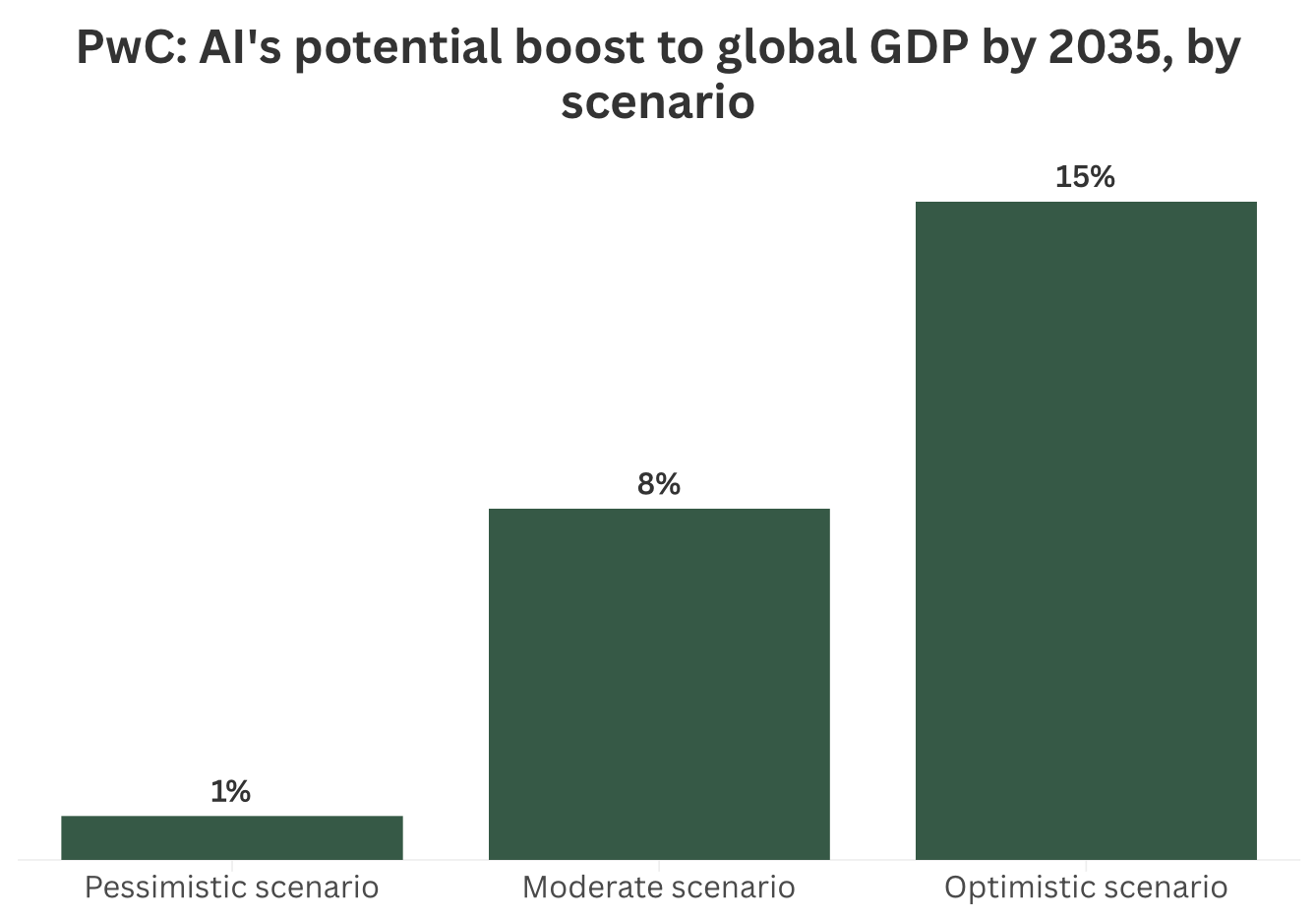
AI is also seen as a driver of economic growth. PwC’s 2025 “Value in Motion”report estimates that it could boost global economic output by up to 15% by 2035. Even in the worse-case scenario, it is still expected to add 1% (Figure 7).
The outcome depends on governance and how responsibly AI is deployed worldwide.
AI can help in businesses to connect data, people, technology, and processes to enhance the conduct of business. It is also about being transparent and interconnected so that sustainability transformation becomes hassle-free and competent.
While adopting AI, significant operational changes may face resistance initially, as internal skills may not be sufficient for planning and execution. However, as complex as this transformation is, it should commence with a clear vision, strategy, and roadmap.