The world is about to pass 1.5°C, but business leaders are going quiet
A new UNEP report suggests that the global temperature rise is likely to cross 1.5°C within the next few years. However, there is still a hope of achieving the goals of Paris Agreement if we act now. Businesses, in particular, have a huge responsibility to find sustainable solutions.


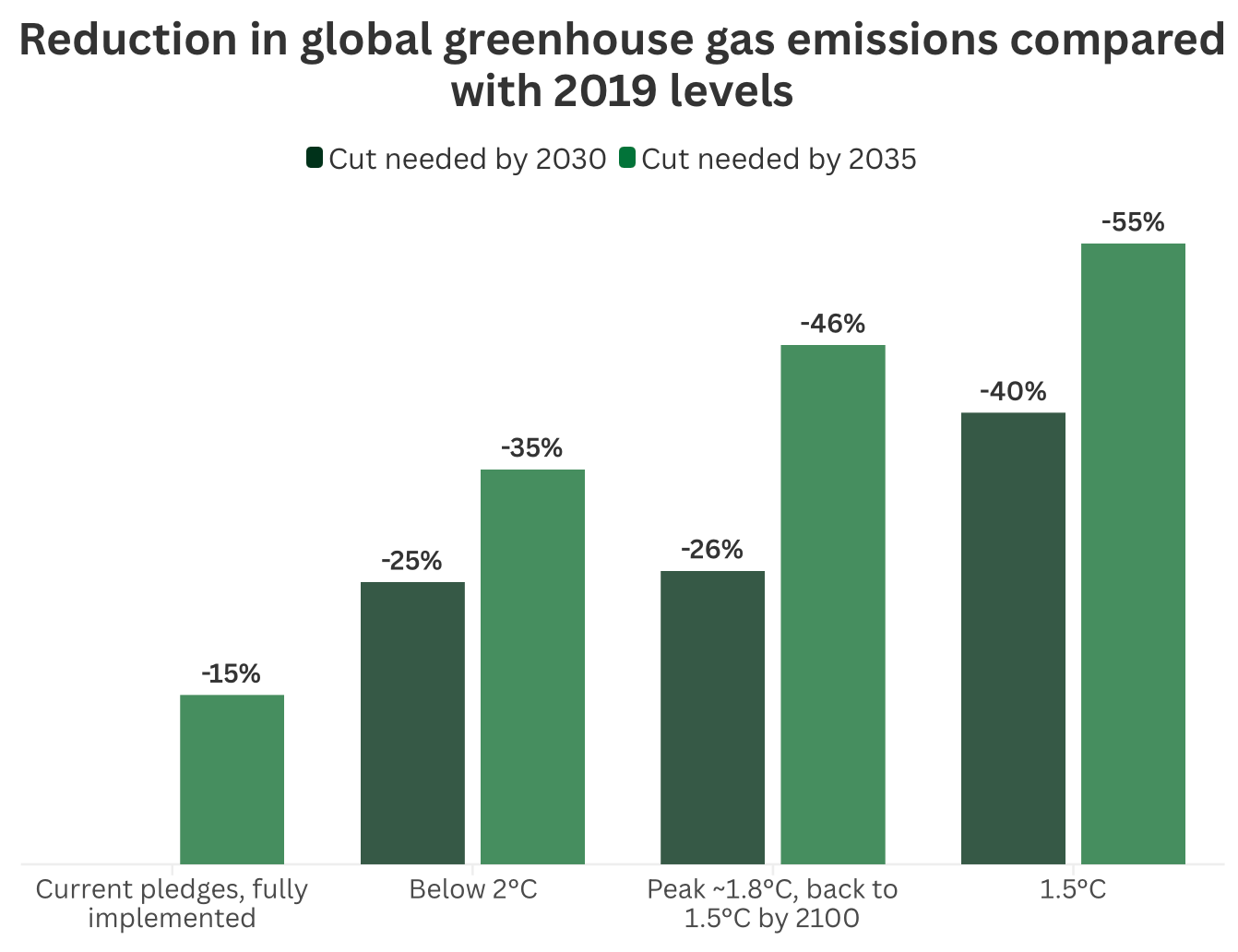
According to UNEP’s Emissions Gap Report 2025, keeping peak warming to about 1.8°C requires global greenhouse gas emissions to drop 26% below 2019 levels by 2030 and 46% by 2035. Limiting warming to below 2°C would require emissions cuts of 35% by 2035 (Figure 1).
But meeting these goals is not a job for one group alone. Government must set stronger rules, businesses must cut emissions and individuals should make their voices heard through the choices they make.
Businesses also have a major responsibilities, as they play a key role in tracking and reducing emissions. However, according to a 2024 report by MSCI institute, listed companies alone produce about 20% of global greenhouse gas emissions while about 84% of listed companies are yet to make a commitment to decarbonise.
In the past decade, businesses have faced increasing pressure to focus on decarbonisation. The responsibility is likely to intensify in the coming days if we were to align with UNEP's recommendation to cut emissions, including methane rapidly.
But climate change is probably not the most pressing issue for many organisations. In Deloitte's 2026 survey of 2,156 C-suite executives across 29 countries, 43% identified technology adoption as their top issue.
In 2022, their top three pressing issues were economic outlook, climate change and technology (Figure 2). This year, the rise of AI has shifted leaders' focus towards technology innovation rather than climate change, which is now tied with talent-related challenges in second position.
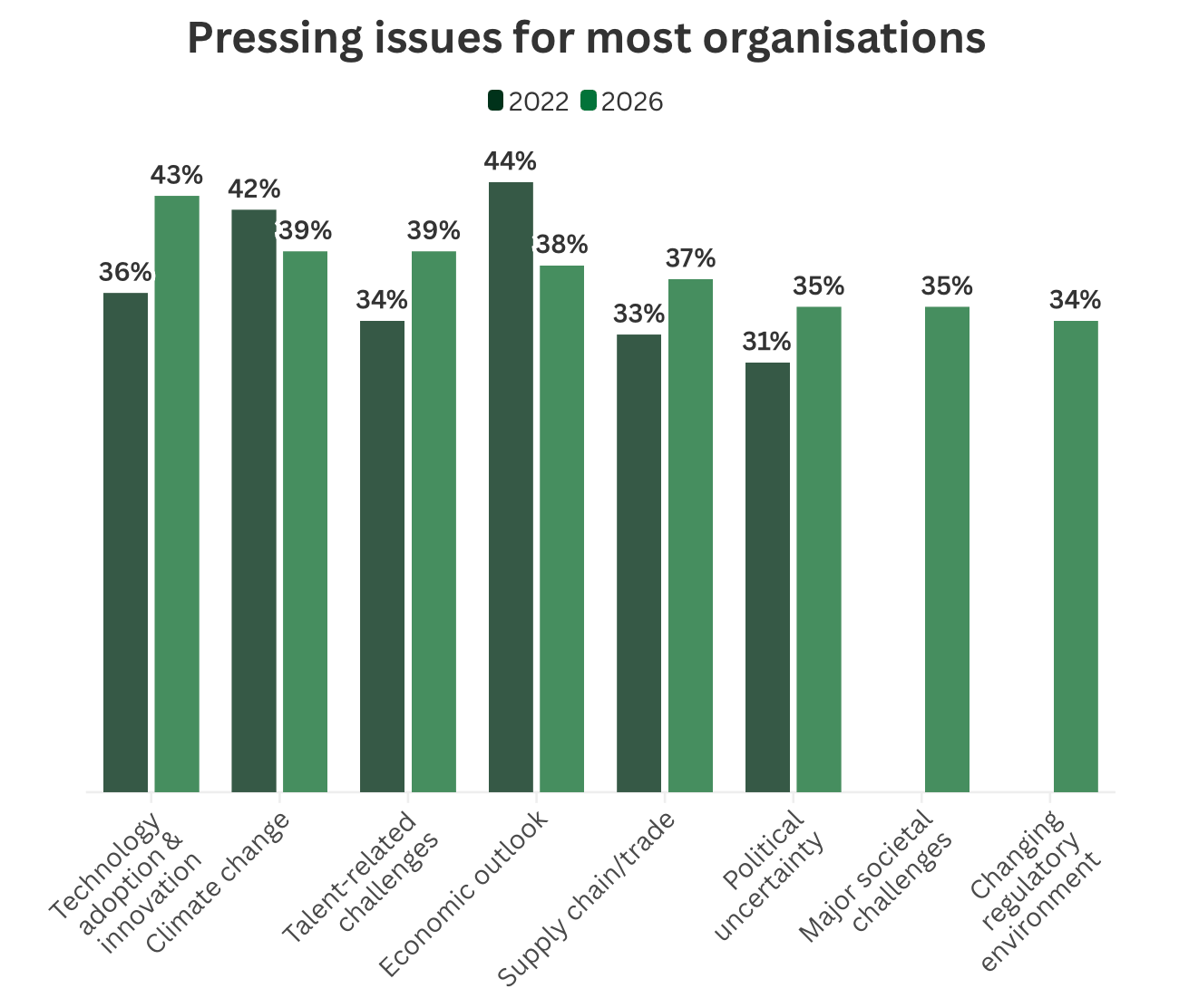
The economic outlook, which topped the list in 2022 at 44%, has slipped to fourth place. Major societal challenges and the changing regulatory environment have also made to the list in 2026 as major issues.
Related: Renewable energy investments call for stronger commitment to net-zero initiatives
Public can push businesses to act
The public holds more influence than it often realises. Businesses probably need to face substantial pressure from various stakeholders, including regulators, customers, and employees, to address climate change.
For example, activism, driven by individuals advocating for change, along with sustained media coverage, could ensure that the issue remains top of mind for leaders and policymakers.
Employees can also ask where their companies stand while consumers can choose to buy from the companies that are taking actions to cut emissions. Also, as economic outlook is one of their pressing concerns, what could actually get businesses’ attention more is where we choose to invest our money.
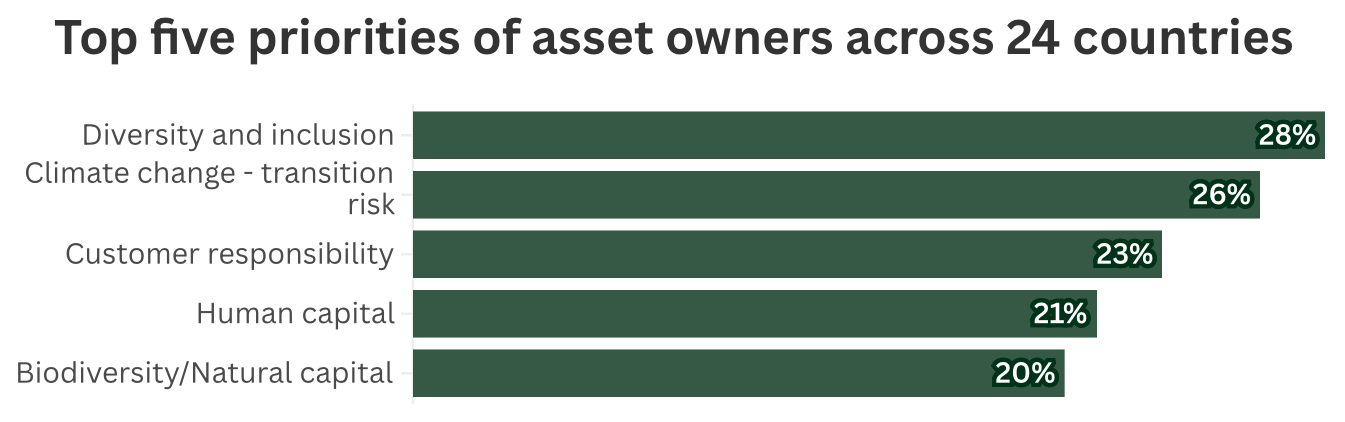
In FTSE Russell's 2025 survey of 415 asset owners across 24 countries, climate transition risk ranked as the second-highest sustainability priority, at 26% (Figure 3).
As stakeholders become more aware of the impact of climate change, they may increasingly prioritise it while choosing companies to manage their pension funds, insurance and savings. Companies that fail to cut emissions could risk losing these customers.
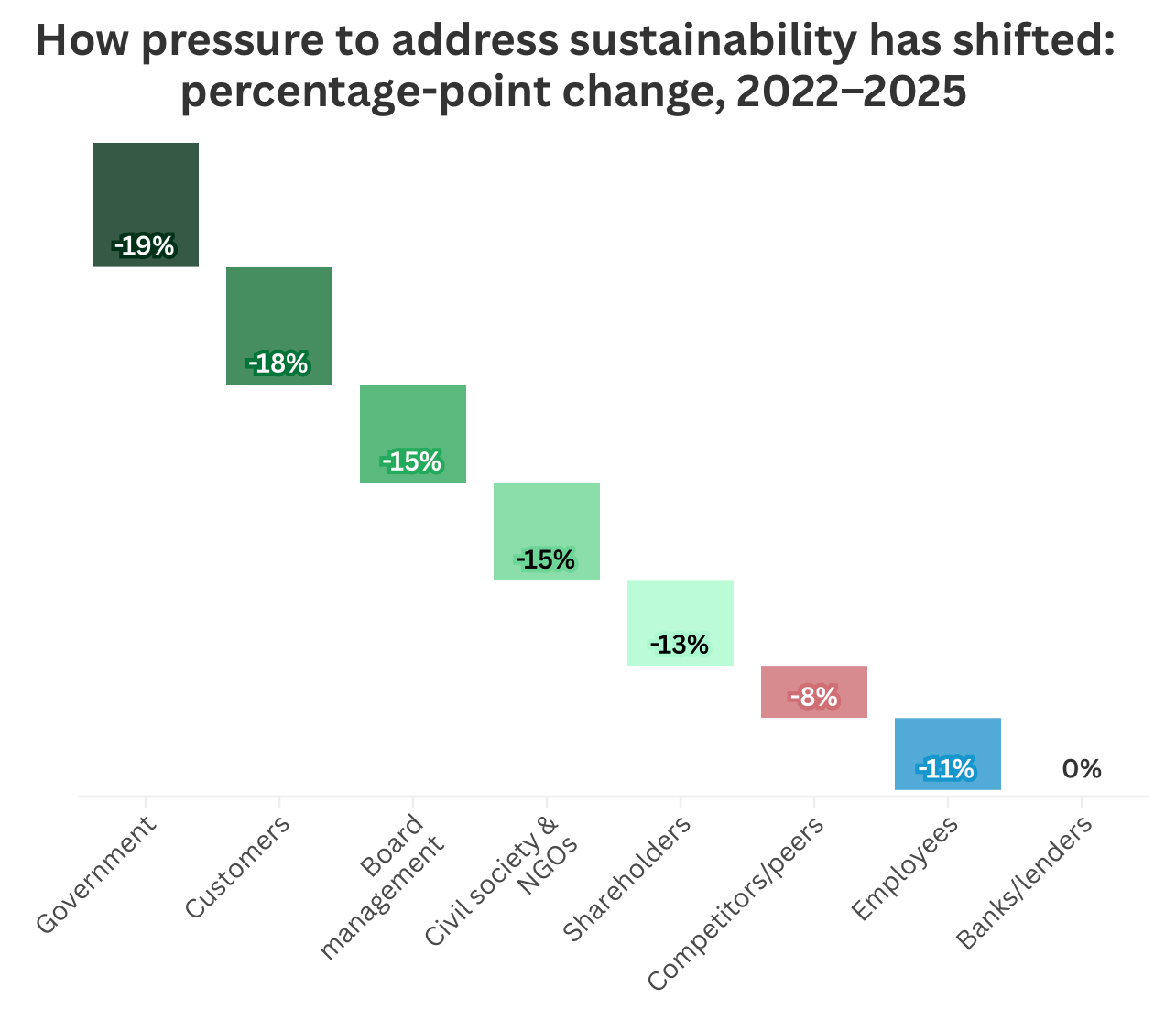
But things might not be going the way they should. Even though warnings about climate change are becoming serious every year, pressure on businesses seems to have eased in 2025. Deloitte’s surveys of C-suite executives show that pressure to address sustainability has fallen since 2022 (Figure 4).
About 77% of leaders felt huge pressure from governments to address sustainability in 2022. But by 2026, only 58% reported feeling pressure from governments, making the change of 19-percentage-point decline. Similarly, the pressure felt from customers and board management fell by 18 and 15 percentage points, respectively, compared with the 2022 figures.
It is clear from these surveys that C-suite leaders acknowledge the need for sustainability in their businesses. However, when it comes to taking action, it doesn’t rank among their top three priorities because they don’t feel enough pressure to act.
Related: Is investing in carbon credits a viable solution to meet climate targets?
How can companies convey their sustainability investment strategies?
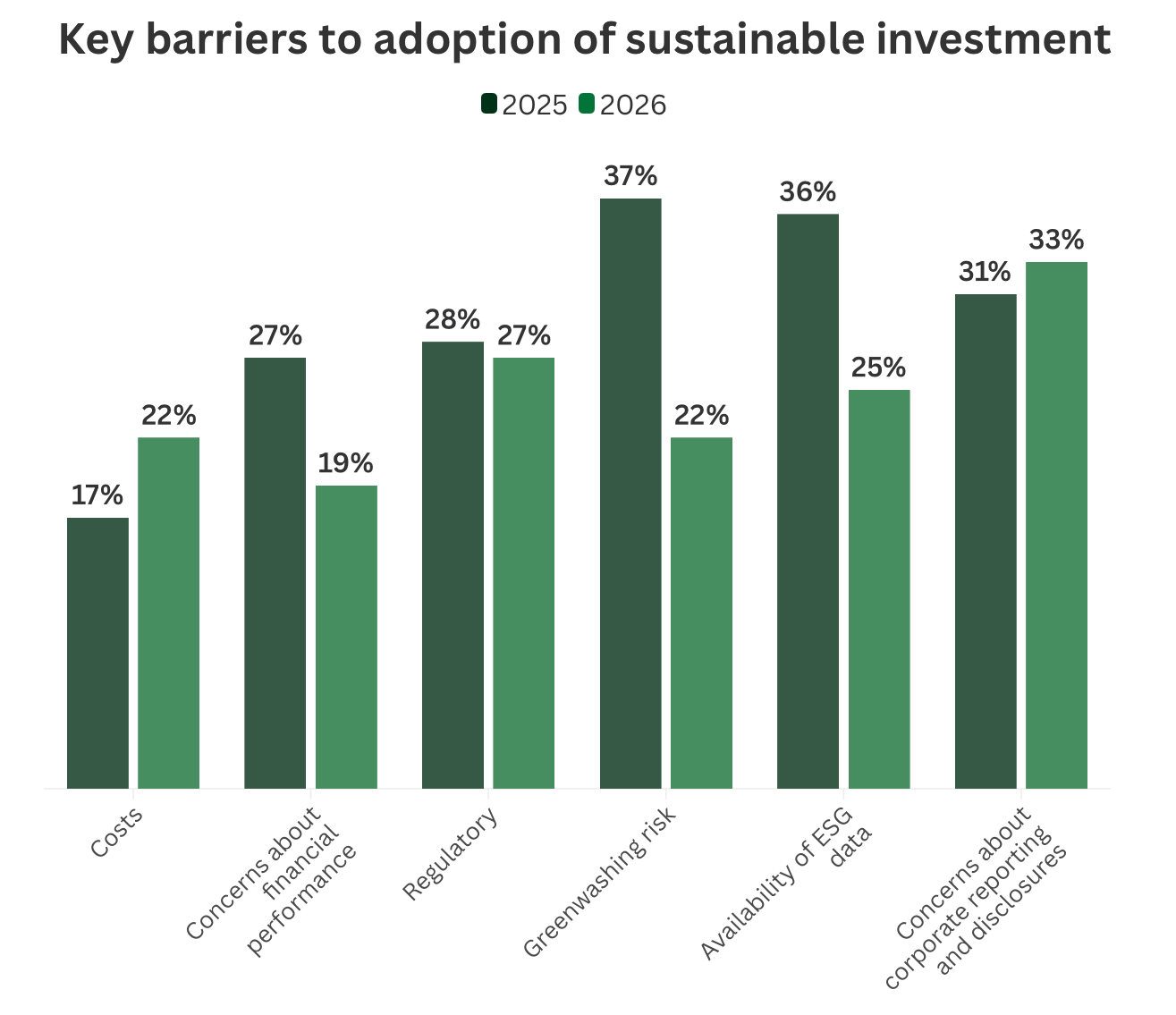
Even though pressure may have eased at the moment, businesses have no choice but to cut emissions, even if its for their economic benefits. Figure 5 shows the results of FTSE Russell’s 2025 and 2026 surveys, which asked asset owners the reasons they hesitate to choose the companies for investment.
In 2025, many were worried about the potential greenwashing (37%) and availability of ESG data (36%). Although these concerns fell to 22% and 25%, respectively, concerns about corporate reporting and disclosure topped the list in 2026, at 33%.
Although the report doesn’t elaborate this barrier into sub-category, it typically relates to incomplete emissions reporting, and the use of different methodologies and approaches in corporate reporting.
So, now the question is how business leaders develop a sustainable strategy and communicate it effectively to consumers:
- Conduct market research. This requires talking to customers, and forecasting the company's sales over the next decades, and assessing the associated impacts. Key decisions must be made, such as whether the company will commit to electric vehicles or switch to renewable energy by making investments or exploring joint ventures.
- Plan the company’s strategic approach. Openly communicate to the staff and customers about the strategic approach. For example, car companies can specify their intentions and the pace of their transition to fully electric vehicles. In some cases where solutions are not definite, companies need to focus on research and development, including exploring new materials that offers less carbon-intensive options.
- Clean up the supply chain. In the cases where companies have exposure to huge and complicated supply chains, identifying suitable suppliers or collaborating with joint venture partners on specific objectives could be an effective approach.
- Contribute to value creation. Leaders must establish a direct and credible link between a company’s ESG strategy and its overall value-creation strategy. They should be able to guide investors through the reasoning behind their chosen initiatives and communicate how their strategy will sustain cash flows, mitigate risks, and impact top-line growth.
Related: Hybrid vs electric car: how employers can influence the EVs uptake?
The road to a sustainable future is a gradual process that requires investment driven by creative strategies. But only by prioritising sustainability, leaders can strengthen their business development while also helping to put us on a trajectory towards achieving the goals of the Paris Agreement.