How climate change is increasing your household bills
Household bills are rising everywhere. While inflation and geopolitics often take the blame, extreme weather, supply disruptions, and energy market shifts are increasingly shaping the price of everyday essentials.
As the temperature rises, an extreme weather events impact all parts of the supply chain from food to energy in the worse possible way. As a result, it will impact the costs associated with these products.
Energy bills increase as we pay more to stay cool or warm
Energy is essential for human life. Not only for cooking and lighting, but also for protection from extreme summer heat and winter cold.
Read: Is natural gas renewable or non-renewable?
During the summer months, when heat waves occur, we rely heavily on the use of air conditioners. In 2025, Americans spent an average of USD 784 to cool their homes from June through September. In Europe, there was a 14% increase in the daily price of electricity due to the demand for air conditioning during the summer months.
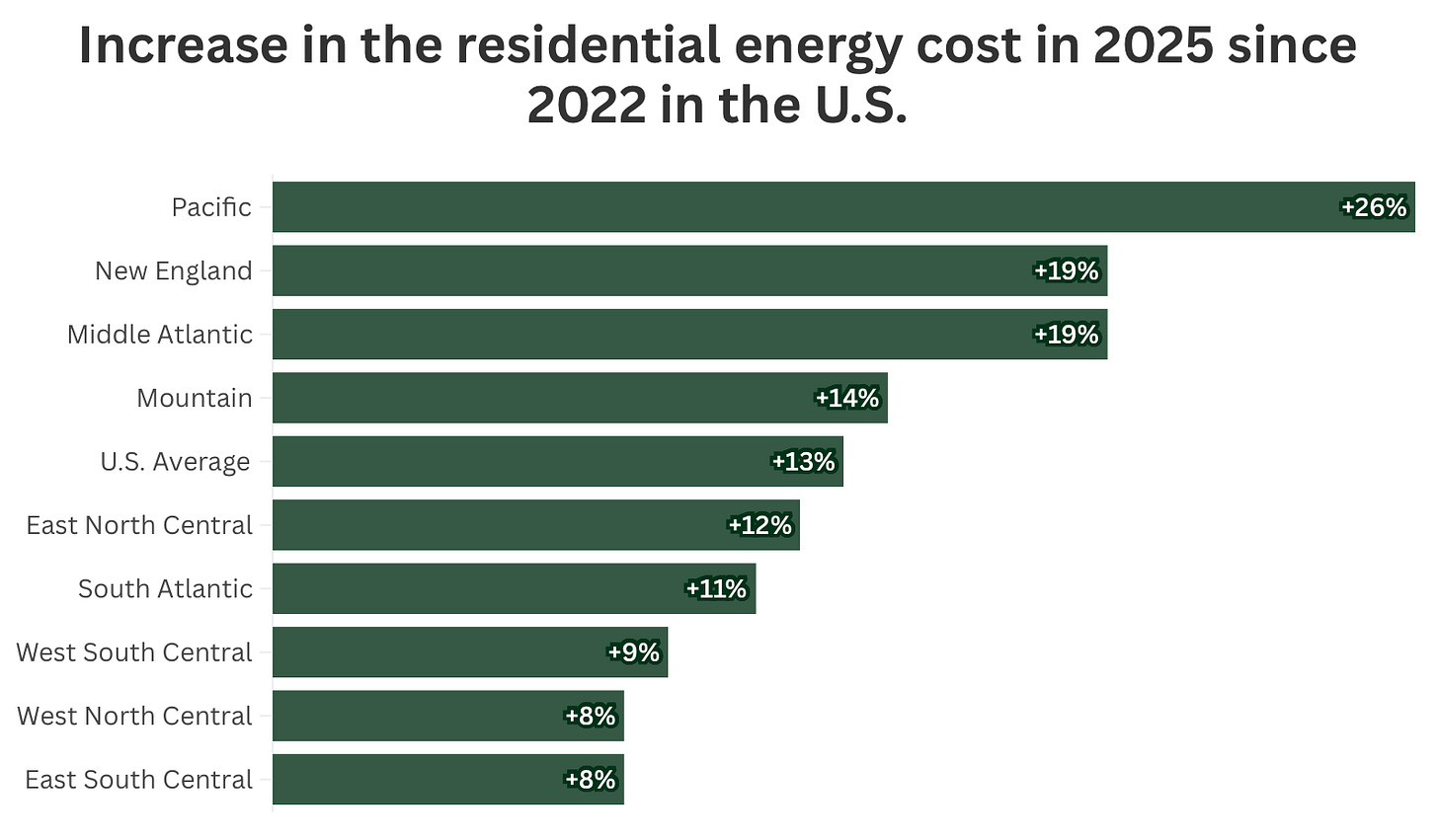
Figure 1 shows the increase in residential energy cost in 2025 since 2022 in different parts of the U.S., published by the U.S. Energy Information Administration. The Pacific region has the highest increase, primarily driven by the rapid expansion of data centers and growth in high-tech manufacturing.
Read: The critical role of power sources in the climate crisis
Another problem is that when wildfires, flooding, and hurricanes occur, the electrical infrastructure is typically damaged. This drives up the cost of the repair, and that expense is ultimately borne by the consumer through increased energy bills.
Meanwhile, extreme rainfall events are damaging sewer systems, forcing utilities to upgrade pipes and treatment plants. Those upgrades end up on our water bill.
Food prices are mounting
The cost of a nice family dinner we have every night at home is worryingly increasing, too. In reality, every stage in the food supply chain, from growing to it being on our plate, relies on stable climate conditions.
The new 2025 report by the FAO (Food and Agriculture Organisation of the United Nations) stated that climate disasters have led to an estimated USD 3.26 trillion losses in the agricultural sector worldwide over the past 33 years. That is an average of USD 99 billion annually.
When the climate is unreliable, the supply chain disruption leads to business disruption, which means cost increases. The cost of this disruption is at the consumer’s expense. Figure 2 shows the change in the consumer price index in August 2025, in comparison to August 2024.
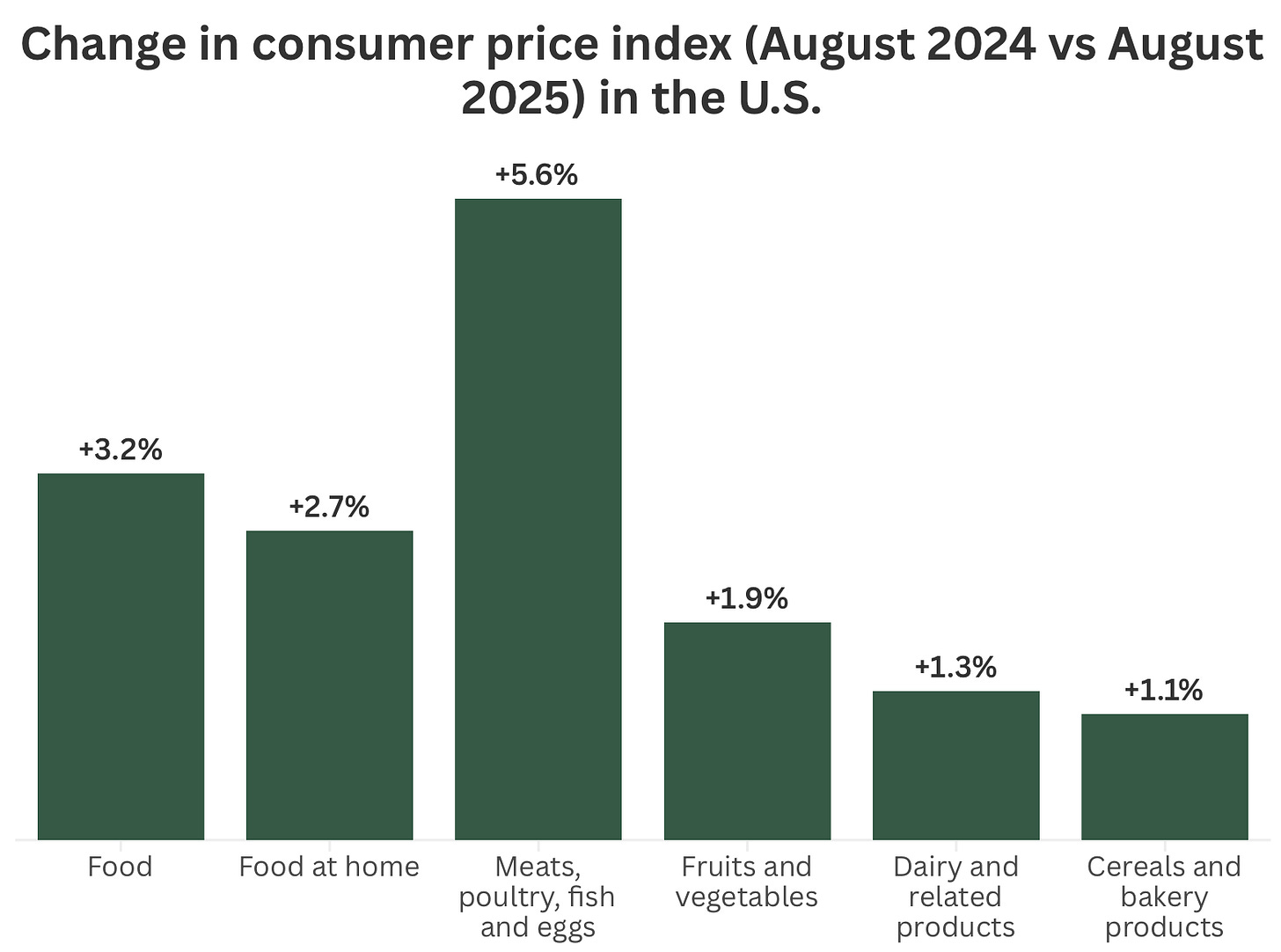
From the figure, the meats, poultry, fish and eggs shows the highest increase. It is because the extreme heat causes livestock to suffer greatly, resulting in decreased productivity. In the U.S., dairy farmers are said to lose between USD 1-2.5 billion each year due to heat-related losses. Smaller farms tend to suffer significantly more from extreme heat.
Another clear example is the 17% increase in global wheat prices in 2022-23 due to extreme flooding in Pakistan and severe droughts in both Canada and the U.S. This proves that the impact is not local. And this is also the main reason the impact of climate change on food has been a topic of interest in the research industry.
In a recent 2024 research, a team investigated compounding and cascading events on maize yield in Sinaloa, Mexico, between 1990 and 2022, using the WOFOST mathematical crop simulation model. For this study, drought events were identified using the Standardised Precipitation Index, and heatwave events were identified using threshold values. Study results indicate an average maize yield reduction of approximately 25% during extreme drought events.
Read: Hot summer: A disadvantage to wind energy
Another study from Stanford in 2025 concluded that the global yields of barley, maize, and wheat are 4 to 13% lower than they would have been without climate impacts.
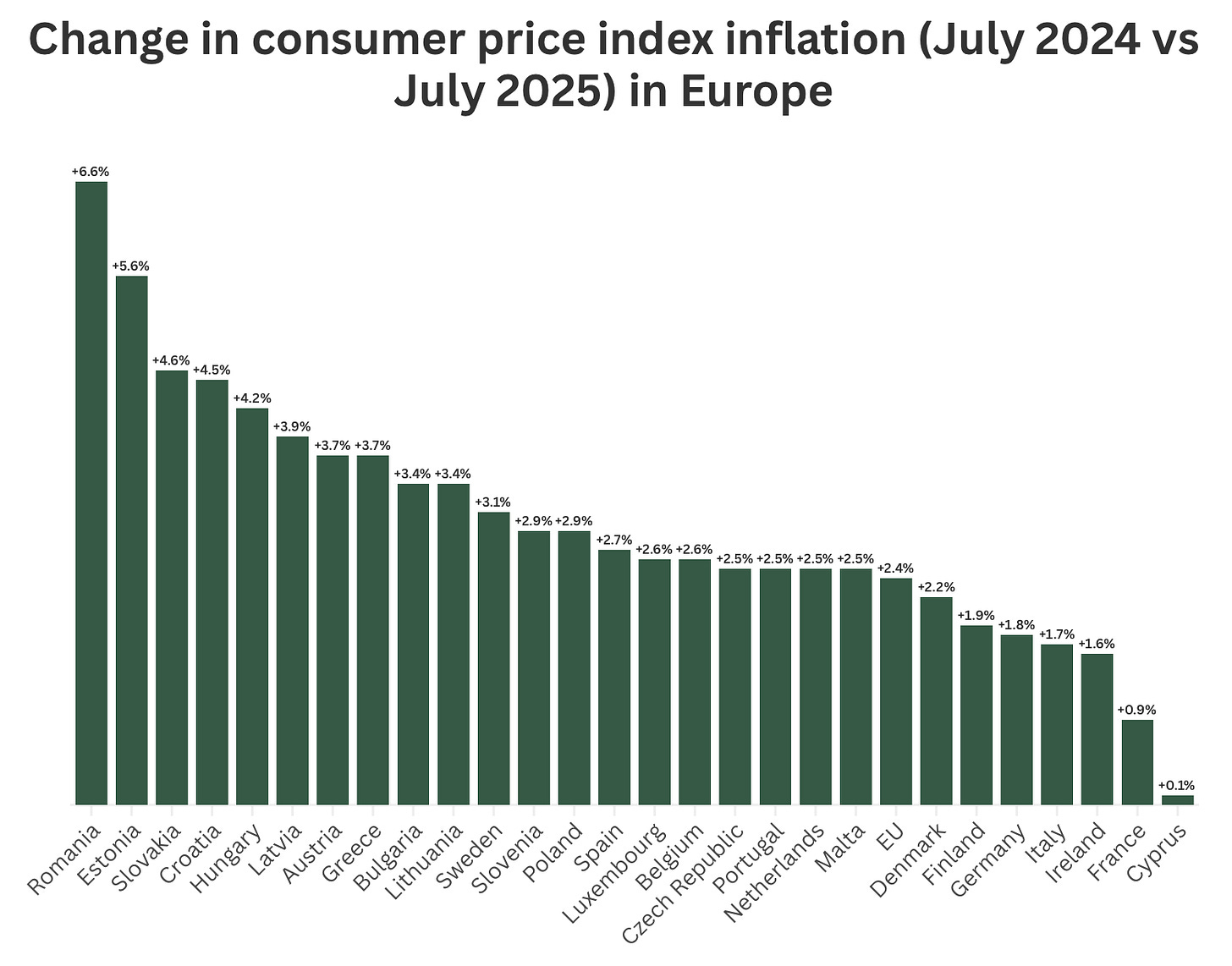
The result is similar in Europe. Figure 3 shows the change in consumer price index inflation in different countries in the region. The average increase in the EU is 2.4%, and the comparison was done between July 2024 and 2025.
The climate penalty on insurance protection
Insurance is one of the simplest examples of how climate change hits household budgets. As extreme weather grows more frequent and severe, insurers are paying out record claims.
- Home insurance costs in the U.S. rose by 21% on average in 2023. This is the biggest jump in decades.
- The Association of British Insurers (ABI) has announced that 2024 was the UK’s costliest year on record for flood insurance claims, with payouts exceeding £650 million. Moreover, projections indicate that by 2069, the number of properties vulnerable to river and coastal flooding could increase by 27%.
- The 2025 report by Go Compare shows that homeowners across the UK have seen their home insurance costs increase by 56% since 2022.
Insurance companies will be filing more and more large claims and are actually paying out record amounts of claims due to extreme weather events, as the frequency and severity increase. Also, the areas that are frequently hit by floods and hurricanes are also paying more, the more they get hit. This means the homes are basically losing value.
Households that cannot afford protection against natural disasters will be put in a financially vulnerable position.
Now, how is inflation related to climate change?
Here is how everything is connected: climate change disrupts supply chains, which raises prices, and those higher prices increase household expenses.
Now, climate change isn’t only about melting glaciers. It’s already changing how much it costs to live, from our air conditioning bill to grocery receipts.
The next time the bill seems high, remember! The part of that increase is the hidden price tag of a warming planet. The climate volatility is becoming a key driver of energy price volatility, which basically means we as consumers are paying more for just living.